
Plinko Casino UK: Access, Games and Payments
 Available in GB
Learn how UKGC authorisation differs from offshore access, and what to check across demos, payments, bonuses and Plinko rounds.

Table of Contents
- Online Plinko Access in the UK: Regulated and Offshore Routes
- How Plinko Fits into Casino Game Categories
- Playing Plinko for Real Money: The Trade-Off
- Free Plinko Play: What You Can Check Before You Start
- Following a Plinko Round from Stake to Outcome
- Plinko Sites, Bonuses and the Terms That Matter
- Choosing a Plinko Slot by the Criterion That Matters to You
- Plinko Demos and Slot Versions: What Is Verified
- Deposits and Withdrawals at Casinos with Plinko
- Crypto Payments and Plinko Casinos
Online Plinko Access in the UK: Regulated and Offshore Routes
When you look for an online casino offering Plinko in the UK, the first distinction to make is not about the game. It is whether the operator is licensed by the UK Gambling Commission (UKGC) to serve the British market. A game listing can tell you what a platform says it offers; it does not establish that the platform is authorised to offer gambling to you.
A specialist review has described the 2026 online casino landscape as two parallel spaces: UKGC-regulated casinos and offshore platforms that accept UK players. That description is useful for understanding what you may encounter, but it is not a description of two equally lawful routes. Offshore platforms may be reachable from the UK while operating outside the UKGC system. Accessibility and authorisation are different questions.
The UKGC-regulated route
The legal position is clear for operators. Since the Gambling (Licensing and Advertising) Act 2014, an operator that wants to take bets from British residents must hold the required licence. For real-money gambling offered to customers in England, Scotland and Wales, that means a licence from the UKGC. A casino serving British customers legally therefore needs the relevant UKGC authorisation, regardless of where the business is based.
When choosing a Plinko casino in the UK for 2026, you may want to check how quickly withdrawals are listed to arrive. Use the payout timings below as one practical point of reference.
Payout speed: 1-3 business days Dieselwin lists a payout speed of 1–3 business days, giving you a stated timeframe to consider.
Payout speed: 1-3 business days Britsino lists payouts at 1–3 business days, so you have a stated withdrawal timeframe to factor into your choice.
Payout speed: 1-3 business days EvoSpin’s listed payout speed is 1–3 business days, offering you a clear timing detail to consider.
Payout speed: 1-3 business days WinBeast lists a payout speed of 1–3 business days, which gives you a stated timeframe for withdrawals.
Payout speed: 1-3 business days SpinFormula lists payouts at 1–3 business days, a useful timing detail for you to keep in mind.
Payout speed: 1-3 business days NightWin’s stated payout speed is 1–3 business days, giving you a withdrawal timeframe to consider.
Payout speed: 1-3 business days Revery Play lists a payout speed of 1–3 business days, providing you with a stated withdrawal timing.
Payout speed: 1-3 business days Zombillion lists payouts at 1–3 business days, so you can use that stated timeframe as one point of reference.
Payout speed: 1-3 business days Amunbet’s listed payout speed is 1–3 business days, giving you a specific timing detail to consider.
Payout speed: 1-3 business days BeOnBet lists a payout speed of 1–3 business days, which gives you a stated timeframe for withdrawals.
This matters when you are assessing an online casino with Plinko. The key check is whether the operator itself is licensed for the market, not whether its website loads, uses familiar language or displays games that appear aimed at UK players. A platform’s own claims should be checked against the regulator’s register. The name or logo of a regulator on a page is not, by itself, proof that the operator holds the appropriate licence.
A UKGC licence places the operator within the British regulatory framework. It is the relevant marker for a legal online casino serving customers here. This does not establish that every licensed casino offers Plinko, or that a particular game will be available to every customer. Game catalogues are separate from operator licensing, so check both matters rather than treating one as evidence of the other.
The offshore route
Some offshore casinos accept UK players but operate outside the UKGC system. They may describe themselves as international or use the term “non GamStop sites”, but such labels do not change their regulatory status. If an operator accepts British customers without the required UKGC licence, it is not a UKGC-regulated casino, even if it can be accessed from a UK connection.
That distinction is especially important when a site advertises an online Plinko game for UK players. A page may present the game as available, but its presence does not make the operator compliant with British licensing rules. Nor does a foreign licence substitute for the UKGC licence required to serve the British market. The location of the company and the licence it holds do not override the rule applying to operators targeting British customers.
For your comparison, keep three questions separate:
- Does the site list Plinko as a game?
- Does the operator hold a UKGC licence to serve the British market?
- Is the game available under the terms that apply to your account?
Only the second question establishes the operator’s status under the UK framework. The first concerns the catalogue; the third concerns the platform’s own availability conditions. Do not let an appealing game page answer the licensing question by implication.
What “available in the UK” can mean
“Available” is an imprecise word. It may mean that a page can be opened, that an operator accepts registrations from UK users, or that a UKGC-licensed casino offers the game. Those are not interchangeable descriptions. In particular, a platform accepting UK players does not thereby become a lawful UK casino.
If your criterion is a legal route to online gambling in Britain, focus on the operator’s UKGC status before considering whether it lists Plinko. If your criterion is simply whether a site claims to offer the game, that claim still needs to be separated from the operator’s legal standing. The order matters: check authorisation first, then assess the game listing.
Search results and casino pages can blur these categories by placing UK-facing wording beside offshore offers. Treat location language as marketing, not proof of a licence. The regulated route is defined by UKGC authorisation; an offshore site that accepts UK players remains outside that system. The distinction is plain, even when the presentation is not.
Licensing Warning
If an operator accepts British customers without the required UKGC licence, it is not a UKGC-regulated casino, regardless of its accessibility from the UK.
How Plinko Fits into Casino Game Categories
Casino games share a basic feature: you stake cash or chips on an outcome, or on a combination of outcomes, that may occur. Beyond that, the category labels describe different things. Some refer to how an outcome is generated; others describe the way a game is presented or who takes part. That distinction matters when you are trying to understand where a Plinko-style game belongs.
Random-number games: how an outcome is generated
A random-number game uses numbers selected by a computer or other gaming equipment. The important point is that “random-number” describes the process behind the result, not necessarily the shape of the game on screen. A game can have a visual board, numbered spaces or a familiar physical-game theme while still relying on a computer-generated selection.
That does not mean every digital game should automatically be called a random-number game. The category depends on how the particular game produces its results. A title or visual design is not enough to establish that. For a Plinko casino game, the useful question is therefore not simply whether it looks like a board with possible landing positions, but what category the operator or game documentation assigns to the version being offered.
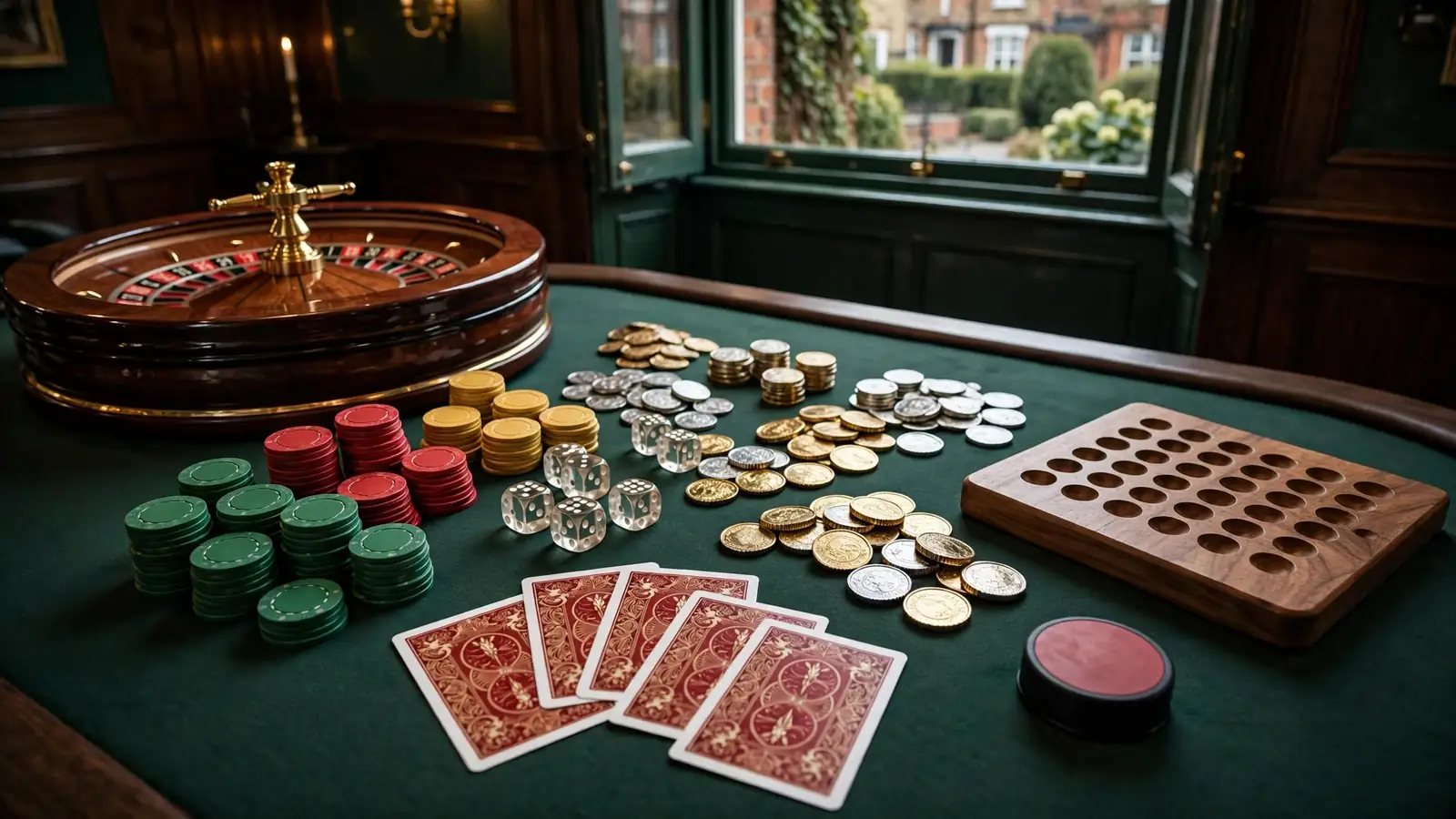
The label also does not explain everything a player might want to know. It does not, by itself, tell you how a round is structured, what outcomes are possible or how a result is presented. Those are separate details. Treating the category name as a complete description is a neat shortcut, but a poor one.
Gambling machines: how the game is played
Gambling machines are generally used by one player at a time and do not require a casino employee to run each play. In an online setting, a game presented through a self-contained digital interface may feel machine-like to the player: you interact with the game directly rather than taking turns with a dealer.
Still, presentation alone does not settle the formal category. A screen-based game might resemble a machine without that resemblance proving how it is classified or how its outcome is generated. “Machine” is a useful way to think about the play format; “random-number game” concerns the selection of results. The terms can point to different aspects of the same product rather than competing labels.
This distinction is relevant when comparing Plinko games with slots. A game may be described informally as a slot because it appears in a casino’s slot area, or because the interface is familiar to slot players. That placement does not establish that it is a slot in every meaningful sense. Check the product’s own classification and description rather than relying on the lobby category or a name used in casual conversation.
While “machine” describes the play format and “random-number game” concerns the selection of results, these terms can point to different aspects of the same product rather than competing labels.
Table games: dealer-led play against the casino
Table games follow a different format. Players compete against the casino, not against one another, and a croupier or dealer usually conducts the game. The dealer’s role is part of the experience: the game is organised around a shared table, with procedures carried out by a person rather than each player simply interacting with an individual machine-style interface.
That makes the table-game category a useful contrast when considering a casino Plinko game. If a particular version is played independently through a digital interface, it may not have the defining dealer-led structure of a traditional table game. But that observation is about format, not proof of an official classification. A digital adaptation can borrow visual elements from many kinds of games; appearance does not turn it into a table game.
Use the label that answers your question
When comparing casino Plinko games in the UK, separate three questions:
- How is the result generated? Look for an explanation of whether selected random numbers are used.
- How is the game played? Is it an individual, self-directed interface, or a dealer-led table format?
- How is the product categorised? Check its listing and description, rather than inferring a category from its name or artwork.
These questions prevent a common muddle: treating “random-number game”, “machine” and “table game” as mutually exclusive boxes. One describes a method of generating results; the others mainly describe a mode of play. A product can be discussed from more than one angle, and the wording used by a casino may not answer every question.
For a Plinko game review, the most useful description is the one that tells you what kind of experience is actually being offered. A casino app may group titles by broad lobby sections, but those headings are navigation aids, not a full taxonomy. Read the individual game information and distinguish its visual theme from its play format and outcome process.
The name is not the classification.
Playing Plinko for Real Money: The Trade-Off
Playing for real money changes what an outcome means. When you stake cash, a result can affect the balance you can use or withdraw; when no cash is at stake, the result does not put your own gambling funds at risk. That difference matters more than the label attached to a game. A Plinko-style title may sound casual, but real-money gambling is still gambling.

The appeal is easy to understand: a winning result may produce a short-term gain. That possibility is part of the experience, but it is not a reliable way to make money. Casino games are designed so that the casino has a predictable advantage over the long term, even though individual players can come out ahead in the short term. A lucky result can happen. It does not cancel the underlying disadvantage or make a later loss less possible.
That is the central trade-off. You exchange the chance of a short-term return for the risk of losing the money you stake. The risk is not theoretical once real funds are involved. Treat any stake as money you may not get back, rather than as a payment that is likely to return with a profit.
What a real-money result can and cannot tell you
A win does not prove that you have found a dependable method. Nor does a loss mean a future result is “due” to compensate you. Short-term outcomes can vary, while the casino’s long-term advantage remains. Looking at a small run of results as evidence of a pattern can encourage you to risk more than you intended.
There is no guaranteed way to win real money at Plinko. A betting system cannot remove the casino’s advantage, and increasing a stake after a loss can increase the amount at risk without improving the underlying odds. If you choose to play, decide in advance what you can afford to lose and stop when that amount is gone. Do not use money intended for bills or other essentials.
Attention Casino games are designed so that the casino has a predictable advantage over the long term; a lucky short-term result does not cancel this underlying disadvantage.
It is also useful to separate the game’s presentation from the financial decision. A simple interface or quick sequence of results does not make a cash stake safer. The relevant question is not whether a game looks easy to follow, but whether you are comfortable losing the amount you choose to wager.
The UK distinction
For real-money online gambling to be legal in Great Britain, the operator must hold the relevant UK Gambling Commission licence. A site’s willingness to accept a UK player is not, by itself, evidence that it is authorised to offer gambling to people in Britain. The UKGC framework also sets requirements for licensed operators; it does not turn gambling into a source of dependable income.
So, when you see claims about a Plinko casino game for real money in the UK, keep two questions separate: is the offer legally available to you, and are you willing to accept the financial risk? The first concerns the operator. The second concerns your own budget and expectations. Neither a review nor a game label can promise that you will win, and a possible withdrawal is not a guaranteed outcome.
If your aim is entertainment, set a firm spending limit and regard it as the cost of playing, not an investment. If losing the stake would cause financial pressure, do not place it. Taking a break is a better response to frustration than trying to recover losses with further bets.

The concise version: possible gains, real losses, no dependable edge for the player. That is the trade-off.
Free Plinko Play: What You Can Check Before You Start
A free-play option can be useful if you want to look around before committing money, but it should not be assumed to exist. A casino may offer a game without providing a no-cost version, and the wording on a promotional page does not, by itself, confirm that you can open and play it for free. Check the game page and the casino’s own help or terms before treating free access as available.
Start with the basic point: can you launch the game without depositing or placing a cash stake? Look for a clearly labelled practice, demo or play-for-fun option. If the page instead asks you to fund an account, accept an offer or make a wager, it is not a free-play route in the ordinary sense. Do not proceed on the assumption that a free mode will appear after registration; confirm what is available first.
Then check what “free” means in that particular setting. It might refer to access without a cash stake, or it might describe a promotion with conditions. Those are different arrangements. Read the accompanying explanation rather than relying on a button label or a banner. If the terms do not make clear whether money is required, or what happens to any balance shown during play, pause and ask the casino for clarification.
- Look for clearly labelled practice, demo or play-for-fun options
- Confirm the free mode is available before registration
- Read accompanying explanations of “free” terms
- Use the casino’s own stated download routes for apps
- Assume a free mode will appear after registration
- Proceed if the page requires a deposit or wager first
- Rely on button labels or banners without reading terms
- Install software from unfamiliar pages to try a game
Before opening a game, check whether the free option works for your device and account status. A game page may be visible while access is restricted, or a feature may behave differently on a phone than on a desktop. If you are using an app, make sure it comes from the casino’s own stated download route; a download prompt is not proof that a free version is included. Avoid installing software from an unfamiliar page just to try a game.
It also helps to set expectations about what free access can tell you. It may let you see the presentation or become familiar with the available controls, but it cannot show what a cash session would pay out. A play-money result is not evidence of a future real-money result. If your main concern is payout, free play cannot settle it; check the game’s information and the applicable terms separately, where they are provided.
A practical check before you start:
- Is the game available to open without a deposit or cash stake?
- Is the option explicitly described as practice or free play?
- Do the terms explain any restrictions or conditions?
- Can you use it on your device without downloading from an unfamiliar source?
- Is it clear whether the displayed balance is only for practice?
If any answer is unclear, treat access as unconfirmed rather than assuming the casino offers a free version. The same caution applies to claims about free spins: that phrase can describe a promotion, not unrestricted access to a game, and its conditions need to be read on their own terms.
For a UK player comparing places to try Plinko without spending, the useful criterion is confirmed access—not a broad claim that a casino has free games. Check the exact game listing and the conditions shown at the point of access. If neither makes the arrangement clear, move on without depositing just to find out. Free should be clear.
Following a Plinko Round from Stake to Outcome
A round begins with a stake: the cash or chips you put at risk under the game’s rules. That amount is not a prediction of what will happen next. It is the value attached to the round, while the result depends on the outcome the game produces.
For a casino game based on random-number generation, software or other gaming equipment selects random numbers to determine an outcome. That describes a general way casino games can work; it does not establish the precise mechanism used by every Plinko game. An animation may show a sequence of events, but its appearance alone cannot tell you how results are generated or how they are settled.

The useful question is therefore not simply how a Plinko round looks. It is what the rules say happens to your stake after the result is determined. Before starting, check how a round is initiated, whether the amount shown is the full stake for that round, and where the game explains the possible outcomes. Do not infer a payout from a graphic, a label or a previous result.
A casino game may produce a single outcome or a combination of outcomes. The rules determine how that result relates to the stake. Without those rules, it would be guesswork to describe a particular Plinko path, payout table or sequence of events. Keep the distinction clear: the stake is the amount put forward; the outcome is what the game returns; and the game’s stated terms govern any relationship between them.
What one round can tell you
A completed round gives you its own result, not a reliable forecast for the next one. If a game uses random outcomes, a run of one result does not, by itself, prove that another result is now due. Nor does changing the stake make a particular outcome more likely. A larger stake changes the amount exposed, not the evidence available about what will happen.
Past Outcomes
Past results are a record of what happened, not a tool for steering or predicting future random outcomes.
This matters when you are trying to work out how to win at Plinko. There is no dependable method to derive a future random result from earlier rounds. You can make a decision about whether the stated stake and rules suit you, but that is different from controlling the result. Past outcomes are a record, not a steering wheel.
For a careful check, read the rules before placing a stake and identify the information that actually affects your decision: the amount committed, the way a round is settled, and the game’s explanation of outcomes. If those details are unclear, pause rather than filling the gaps with assumptions. This is more useful than treating an animation or a short run of results as a pattern.
In short, follow the round in order: understand the stake, allow the game to determine its result, then refer to the rules for what that result means. The sequence is simple. The detail matters.
Plinko Sites, Bonuses and the Terms That Matter
A bonus attached to a Plinko offer is not a verdict on the casino or the game. Read the conditions separately from the headline: the amount offered tells you little about how much of it can be withdrawn, which games count towards wagering requirements, or when the offer ends.
A no-deposit bonus means you can receive casino bonus funds without spending money. It does not mean the funds are immediately withdrawable or free of conditions. Before accepting one, check whether Plinko is eligible, whether wagering applies to bonus funds or winnings, what stake rules apply while the offer is active, and whether any deadline or withdrawal condition is stated. If the wording does not make those points clear, the headline is doing more work than the terms.

For bonuses offered in the UK, a specialist gambling-industry review reports that, from 19 January 2026, wagering requirements on incentives cannot exceed 10x the bonus funds. Treat the requirement as a calculation, not a label: it sets the total qualifying stakes needed before bonus-related funds can be withdrawn. A lower figure may sound attractive, but it still matters whether the game you intend to play contributes towards that total.
There is also a product boundary. An incentive cannot require you to gamble across different product types, such as casino games and sports betting, to unlock a reward. If an offer combines those conditions, that is a reason to pause rather than a clever extra route to the bonus.
For a Plinko casino in Britain, the licence question matters more than the promotion. A remote operator serving the British market must hold the relevant UKGC licence; an offshore casino operates outside that regulatory system. An offer’s size or apparent generosity does not change that status, and bonus terms alone cannot establish that a site is legitimate.
If you are comparing Plinko offers, put the conditions side by side: eligibility, wagering, qualifying games, stake rules, expiry and withdrawal restrictions. Then check the operator’s licence independently. A tidy table beats a bright banner.
Choosing a Plinko Slot by the Criterion That Matters to You
“Best” only means something once you decide what you want from a game. A reader looking for a simple format may judge it differently from someone comparing game features or looking for a particular style. Those are different criteria, not a single league table.
Choosing a Plinko Slot
- Review the game’s rules and available settings
- Establish how an outcome is determined
- Verify if a return measure is published
- Check for clear information on volatility and provider
- Separate the game’s characteristics from the casino’s platform
For a Plinko slot, start by checking what the game actually offers: its rules, available settings and how an outcome is determined. Treat the title and presentation as separate from measurable features. A familiar name or polished design does not establish that a game offers better value or suits your preferences.
A useful comparison needs like-for-like details. If one game publishes a return measure and another does not, the two cannot be ranked on that measure with confidence. The same applies to claims about volatility, provider or special features: look for clear information tied to the specific title, rather than assuming that all games labelled Plinko work alike. A list without a stated criterion is decoration.
There is also a difference between choosing a game and choosing a casino. A casino comparison concerns the place you would play; a game comparison concerns the title’s rules and characteristics. Keep those decisions separate, or a convenient platform can end up being mistaken for evidence that its Plinko game is the strongest option.
No single pick suits every player. Your preferred format may matter more than a headline rating, while someone else may put greater weight on documented game information. Set the criterion first, then compare only titles for which that criterion can be assessed. If the details are unclear, do not treat confident promotional wording as a substitute.
The financial trade-off remains relevant whichever title you prefer: casino games can produce short-term gains, but their structure gives the casino a predictable advantage over the long term. A “best” label does not change that. The criterion matters; the label does not.
Plinko Demos and Slot Versions: What Is Verified
A Plinko game presented as a demo, a slot or a slot demo may sound like a clear product description. The label alone does not establish how the game works, who made it or whether you can try it without staking money. Those details matter more than the wording.
For a UK player, “demo” should mean a version that can be played without risking a cash balance. Do not assume every game page offers one, or that a free version matches the real-money version in every respect. Check what the page says about access, whether an account is required and whether any conditions apply before you begin.
Verifying Game Labels
Labels like “demo” or “slot” are not proofs of format. A “demo” should allow play without risking a cash balance, while “slot” does not confirm specific rules or features. Always verify the actual title and provider against the rules page.
“Slot” is also a label, not proof of a particular format. Casino games can include machines, table games and games based on random numbers generated by equipment or software. A product’s name does not, by itself, tell you which category it belongs to. Nor does the word “slot” confirm that it follows the same rules or has the same features as another game using that description.
What to check on a game page
Look for information that identifies the actual title and its provider, then compare that with the game screen and any help or rules page. If a page uses terms such as “Plinko slot” or “demo”, check that those terms refer to the playable product rather than a promotional heading or a description of a related game.
A useful comparison is straightforward:
| Detail | What to establish |
|---|---|
| Game identity | The title shown for the playable game |
| Provider | The company identified as making it |
| Demo access | Whether the page offers play without a cash stake |
| Version | Whether the demo and real-money game are described as the same title |
If any of those details are unclear, treat the label cautiously rather than filling in the gaps yourself. A familiar name is not a specification. Likewise, a demo button is useful only if it opens the game in the way the page describes. Verify the product, not the promise.
Deposits and Withdrawals at Casinos with Plinko
When comparing a casino that offers Plinko, assess payments separately from the game itself. Deposits and withdrawals determine how money enters and leaves your account; a game’s name tells you nothing about how those transactions are handled.
Open Banking and Faster Payments have made transfers to and from online casinos less cumbersome. That can simplify the payment journey, but it does not establish how quickly a particular casino will process a transaction. Check which methods the operator supports and whether the same method is available for both deposits and withdrawals.
Timing claims need careful reading. A specialist review reports that many platforms offer instant deposits and withdrawals that can be completed within hours rather than days. Treat that as a reported feature, not a promise for every casino with Plinko in the UK. The method you select, the operator’s processing and any account checks can all matter; confirm the stated conditions before sending money.

For a Plinko casino withdrawal in the UK, look beyond the headline speed. Read the cashier information for processing stages, any stated fees, minimum or maximum transaction conditions and whether withdrawals must return through the original payment route. If the information is unclear, ask the operator before depositing. A quick deposit does not prove that a withdrawal will follow the same timetable.
A useful comparison table has one row per casino and columns for deposit methods, withdrawal methods, published processing times and any transaction conditions. That makes differences visible without confusing a payment feature with a game feature. If a platform gives no clear withdrawal information, record that as an unresolved point rather than assuming its payments are fast.
The phrase “what is Plinko casino” can refer to a casino offering the game, but it does not identify a payment service or a shared cashier standard. Each operator sets out its own available routes and processes. Check the cashier and withdrawal terms for the specific platform you intend to use. Payments are a separate test.
Crypto Payments and Plinko Casinos
A specialist review reports that some alternative platforms accept Bitcoin, Ethereum and Litecoin alongside conventional cards and e-wallets. That is a claim about payment options on some platforms, not confirmation that any particular casino offering Plinko accepts cryptocurrency. Availability can differ between operators and may change, so treat the cashier’s current payment list as the relevant detail.

If you are comparing a Plinko casino that mentions crypto, check which currencies it supports and whether the option applies to both deposits and withdrawals. A payment method shown in general promotional material may not be available for every transaction or account. Read the platform’s own payment terms before transferring funds; a familiar coin name is not a substitute for clear conditions.
Crypto acceptance also does not establish that a platform is authorised to serve customers in Great Britain. UK-licensed casinos cannot accept credit cards for gambling. Where an alternative platform advertises cards as well as crypto, do not assume that its payment arrangements follow UKGC rules or that a card option is appropriate for you.
For a fair comparison, separate three questions: does the platform list the currency you hold, does it explain how payments are handled, and is the operator licensed for the market it serves? Those criteria are more useful than a broad label such as “crypto casino”. None confirms that a specific Plinko game is available there.
If you prefer conventional methods, some alternative platforms also list cards and e-wallets, according to the same specialist review. Check the exact options directly rather than assuming every method is offered everywhere. Crypto is simply another possible payment route; it does not verify a casino’s status or the availability of Plinko.
Written by the editors at Doesnt-come-out.com.