Curaçao Casino Licence in the UK: What It Means
 Available in GB
A Curaçao licence identifies a separate regulatory system, but does not place a casino under UK Gambling Commission oversight.
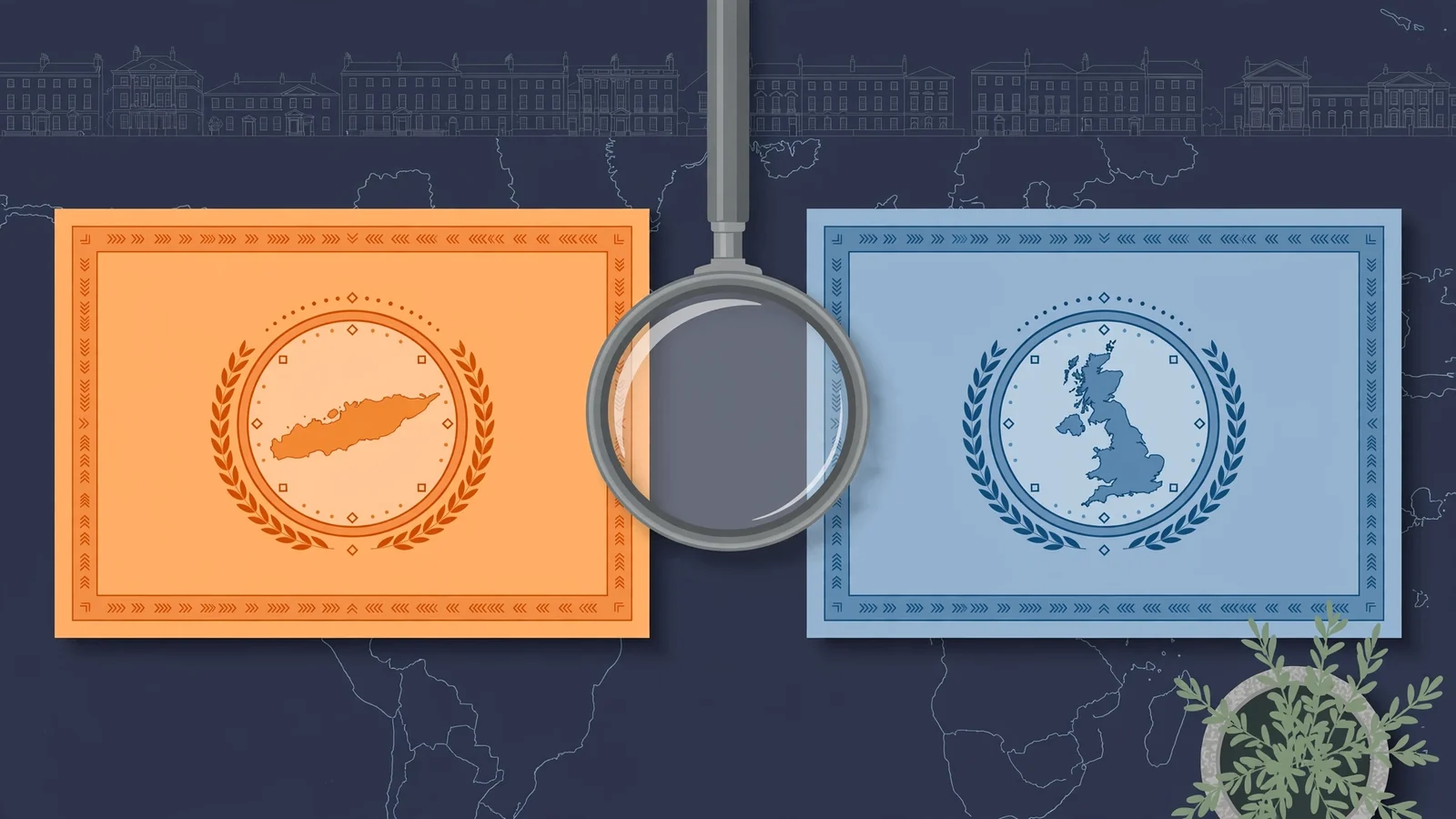
Table of Contents
- What a Curaçao Casino Licence Does—and Does Not—Tell You
- Curaçao Casinos and UK Law: The Position for Players
- How to Read an Offshore Casino’s Licence Claims
- Are Curaçao Casinos Legitimate and Safe to Use?
- Curaçao Casinos and GamStop: What the Difference Means
- What to Expect from Curaçao Casino Sites
- Bonuses and Slots: Check the Terms Before You Play
- Crypto at Curaçao Casinos: What Payment Claims Can—and Cannot—Promise
- Skrill, Neteller and Other Payment Routes
- Checking Whether a Casino Accepts UK Players
What a Curaçao Casino Licence Does—and Does Not—Tell You
A Curaçao licence points to a regulator outside the UK system. It is not a licence from the UK Gambling Commission, and it does not place a casino under that Commission’s oversight. That distinction matters if you are comparing a Curaçao casino with a site licensed to serve customers in Great Britain: the two operate under different regulatory arrangements.
A non-UK-regulated casino is an online gambling site operating without UK Gambling Commission oversight. Such casinos may hold licences from jurisdictions including Curaçao, Malta, Gibraltar or Anjouan. The place named on a licence is therefore a useful starting point for understanding which regulatory system an operator says it belongs to. It is not a substitute for identifying the operator itself.
For businesses serving customers in Great Britain, the key regulatory requirement is a UK Gambling Commission licence, regardless of where the business is based. A company does not become UK-regulated simply because it accepts sterling, uses British-themed branding or describes its services as available to UK customers. Nor does a Curaçao licence become a UK licence because the casino’s website is accessible from Britain.
If you’re considering a casino described as holding a Curaçao licence, check that its licensing and availability are suitable for you in the UK. These verdicts highlight the only operator detail provided here: payout speed.
Payout speed: 1-3 business days Dieselwin lists a payout speed of 1–3 business days. Use that as a guide when considering how quickly you may receive a payout.
Payout speed: 1-3 business days Britsino lists a payout speed of 1–3 business days. This gives you a stated timeframe to consider for payouts.
Payout speed: 1-3 business days EvoSpin lists a payout speed of 1–3 business days. You can use this stated timeframe as one point of reference.
Payout speed: 1-3 business days WinBeast lists a payout speed of 1–3 business days. The available information provides a stated timeframe for you to consider.
Payout speed: 1-3 business days SpinFormula lists a payout speed of 1–3 business days. Keep this stated timeframe in mind when considering payouts.
Payout speed: 1-3 business days NightWin lists a payout speed of 1–3 business days. This is the only payout detail provided for you to assess.
Payout speed: 1-3 business days Revery Play lists a payout speed of 1–3 business days. You have this stated timeframe as a reference when considering payouts.
Payout speed: 1-3 business days Zombillion lists a payout speed of 1–3 business days. Consider this stated timeframe as part of your assessment.
Payout speed: 1-3 business days Amunbet lists a payout speed of 1–3 business days. This stated timeframe is the available detail to guide your expectations.
Payout speed: 1-3 business days BeOnBet lists a payout speed of 1–3 business days. You can take this stated timeframe into account when considering payouts.
The distinction is easy to blur because “licensed” can sound like a single, portable status. It is not. A licence issued in one jurisdiction does not automatically authorise an operator to serve customers in another. When a site displays a Curaçao licence claim, that tells you what jurisdiction it invokes; it does not establish UK Gambling Commission oversight or, by itself, settle what the claim means for that particular business.
That is the limit of what the label can tell you. It should not be treated as a universal quality mark, a guarantee that every operator using it is alike, or proof that a particular casino’s details are accurate and current. Those are separate questions. A jurisdiction’s name and an individual operator’s status are not interchangeable facts.
This is especially relevant when comparing Curaçao casinos with UK-licensed sites. The first comparison point is not a promised feature or a familiar payment logo; it is which regulator, if any, oversees the operator for the market it serves. For Great Britain, operators supplying gambling services to customers must hold the relevant UK Gambling Commission licence. A foreign licence does not replace that requirement.
So, if a casino describes itself as licensed in Curaçao, read that as a claim about its licensing jurisdiction—not as shorthand for UK regulation. The distinction does not decide every question about an individual site, but it prevents one important category error: treating a licence from outside the UK as though it were issued by the UK Gambling Commission. Different regulator, different status.

Curaçao Casinos and UK Law: The Position for Players
The legal distinction is between the operator’s obligations and the individual player’s position. A Curaçao casino may be available to someone in Britain, but that availability does not make it a UK-licensed service. Under the Gambling Act 2005, operators supplying remote gambling to customers in Great Britain must hold a licence from the UK Gambling Commission, wherever the business itself is based.
That requirement is directed at the company offering the gambling service. It is not a rule that makes an individual player criminally liable simply for placing a bet on a site licensed abroad. UK law does not expressly bar British citizens from using gambling services licensed in another country, and playing on an unlicensed site is not, by itself, a criminal offence for the player.
Those points need to be held together. The absence of a criminal offence for a player does not mean that an overseas operator is authorised to target or serve the British market without the required UK licence. Nor does a foreign licence stand in for a UK Gambling Commission licence. The operator’s regulatory position and the player’s exposure to criminal prosecution are separate questions.
What this means in practice
If a Curaçao casino accepts a customer located in Great Britain, that fact alone does not establish that the operator may lawfully supply gambling services to that customer. The UK requirement applies to operators serving the market, not only to companies incorporated or physically based in Britain. A site’s terms, payments or registration process cannot change that licensing rule.
But “not a criminal offence” is not the same as “a UK-regulated gambling service”. Online gambling in the UK is legally provided through operators holding the relevant local licence; a Curaçao authorisation does not give the site that status.
Regulatory Status
Using a Curaçao casino does not mean the operator is authorised to serve the UK market, nor does it provide you with UK Gambling Commission protections.
The same distinction applies if the site describes itself as a Curaçao crypto casino. The payment method does not alter which party the Gambling Act’s operator requirements address, and it does not turn a foreign licence into UK approval. Crypto is not a separate legal category that removes the operator’s obligation to hold the appropriate British licence when supplying customers here.
So, when you see Curaçao casinos accepting UK players, separate two questions: whether the operator is authorised to serve Great Britain, and whether a player faces criminal liability for using the service. The legal answers are not interchangeable. A player’s lack of criminal liability should not be read as evidence that the operator is compliant, locally licensed or part of the UK regulatory system. Different tests.
How to Read an Offshore Casino’s Licence Claims
A licence badge on a casino’s homepage is a claim, not independent confirmation. Treat the site’s wording and logo as a starting point: the useful check is whether the relevant regulator’s public records support the claim and identify the business operating the casino.
Look beyond the brand name. A casino may use a trading name that differs from the company named in its terms or licence details. Compare the operator’s legal company name with the name in the regulator’s record, and check that the entry relates to the site you are considering. If the casino gives only a logo or a vague reference to a jurisdiction, you have less to verify.

Then check the status and validity shown by the regulator. An old certificate, an expired entry or a record for a different company does not establish that the current operator holds the licence it claims. If the regulator provides a register, use that rather than a link or image supplied solely by the casino. If you cannot find a matching record, that is a reason to pause—not proof, by itself, of what the operator’s status is.
This distinction matters when comparing Curacao licensed casinos or looking through a list assembled by a review site. A directory can help you identify names, but its inclusion is not a regulator’s confirmation. Apply the same checks to each entry: company identity, site or operating entity, and current status. The better list for your purpose is the one that makes those details verifiable, not the one with the most names.
A casino’s licensing statement also does not answer every question about its operation. For instance, a claim that a particular slot is available, or that a payment method is accepted, is a separate matter from whether the licence details match. Reviews can describe a site, but they should not replace checking the underlying licence claim.
Anjouan provides a useful example of why the jurisdiction must be identified precisely. An Anjouan casino licence does not permit an operator to serve the United Kingdom or other markets specifically excluded by that jurisdiction. Anjouan’s rules also do not require casinos to use independent random-number testing, undergo audits or keep player money separate from operating funds. Those are points about Anjouan, not rules that should be attributed to Curaçao.
The complaint arrangements differ too. Under the Anjouan framework, casinos are not obliged to join GAMSTOP or offer an independent dispute process on the model of UK-approved alternative dispute resolution. Do not transfer those limitations to a Curaçao-licensed casino without evidence about that operator and its own regulator.
- Compare the legal company name with the regulator’s record
- Use the regulator’s official register for verification
- Check the current status and validity of the licence
- Rely on a licence logo or badge as independent confirmation
- Use a review site directory as a regulator’s confirmation
- Assume a vague reference to a jurisdiction is sufficient proof
Use a simple comparison table if you are assessing several sites: list the casino’s trading name, the legal company stated in its terms, the regulator’s matching entry and the status recorded there. Mark any mismatch or missing detail plainly. This keeps a polished badge from carrying more weight than the record behind it. A small check, with a clear criterion.
Are Curaçao Casinos Legitimate and Safe to Use?
A licence claim and a safe place to gamble are not the same thing. A Curaçao licence may indicate that an operator is authorised under that jurisdiction’s system, but the licence alone cannot establish how a particular casino handles player funds, protects personal data or resolves complaints. Those questions need separate answers.
For a UK player, the practical comparison is with protections attached to UK Gambling Commission-regulated operators. Non-UK-regulated casinos may apply less stringent responsible-gambling and data-protection rules. That can mean fewer safeguards if you need help controlling your play or want to know how your information is handled. It does not, by itself, prove that every Curaçao operator is unsafe; it does mean you should not assume UK-level protections carry over.
Complaint routes matter when a withdrawal or account decision is disputed. Check the operator’s own process and identify who, if anyone, can review a complaint independently. The arrangements are not uniform across non-UK-regulated casinos, so a licence label is not a substitute for finding out what recourse is actually available. No independent route, no easy escalation.
Anjouan illustrates why jurisdiction-specific checks matter, but its rules should not be mistaken for Curaçao’s. Anjouan-licensed casinos do not guarantee that player funds are kept separate from company funds. If an operator fails, players are unsecured creditors. The Anjouan authority does not mediate or decide player complaints. Those are specific shortcomings of the Anjouan framework, not evidence about every Curaçao casino.

For a Curaçao operator, do not infer fund protection or an effective complaint process from the licence claim alone. Look for clear terms explaining how customer balances are treated and how disputes can be escalated; unclear or absent explanations leave you with more uncertainty if something goes wrong. Treat safety as a set of separate checks, not a single verdict attached to a jurisdiction’s name.
Curaçao Casinos and GamStop: What the Difference Means
GamStop is the UK Gambling Commission’s self-exclusion scheme. Casinos outside that scheme are not part of it, so a Curaçao casino operating outside the UK system should not be assumed to be blocked when you register with GamStop. The key distinction is participation in the scheme, not the wording on a casino’s homepage.
That matters if you are searching for Curaçao casinos not on GamStop in the UK. The phrase describes a gap in coverage, not an extra feature or a sign that a site is safer or more suitable. A Curaçao licence does not make a casino part of GamStop, and the absence of GamStop does not show that a casino has a substitute with equivalent reach.
What GamStop can and cannot do
GamStop’s self-exclusion applies to participating gambling services. It is not a general internet filter, and you should not rely on it to prevent access to every gambling website. A non-UK-regulated casino outside the scheme may remain accessible even after you have self-excluded through GamStop. In practical terms, the protection does not travel automatically from the UK scheme to a separate operator.
GamStop is a self-exclusion scheme for participating services; it is not a general internet filter and does not automatically block non-UK-regulated casinos.
This is why phrases such as “Curaçao casinos exempt from GamStop” can mislead. Exemption suggests a formal exception or endorsement. The more useful description is that a casino outside the UK scheme is not participating in it. Likewise, searching for Curaçao online casinos without GamStop does not identify a special category with a shared safety standard: it groups together sites by what they do not provide.
If your intention is to stop gambling, treat access to an outside-scheme site as a real possibility rather than assuming GamStop will close that route. Do not test the boundary with a deposit. That defeats the purpose.
The safeguards and recourse you may lose
At a non-UK-regulated casino, you may not have the mandatory responsible-gambling tools that apply to UK-licensed operators. Nor can you assume that the operator offers protections equivalent to UK requirements. A site may describe its own limits or support measures, but those statements are not the same as access to the UK system.
There is a separate loss of recourse. Players using offshore casinos do not have access to the UK’s Financial Ombudsman Service for disputes with the operator, and they cannot use the UK Gambling Commission’s complaints procedure as though the casino were one of its licensees. If a dispute concerns a self-exclusion request, account access or funds, the route available will depend on the operator and the arrangements it provides. Those arrangements are not a replacement for UK-based recourse.
This comparison is not a claim that every outside-scheme site behaves identically. It is a warning about the protections you cannot presume. The practical test is not whether the site mentions responsible gambling, but whether the protection you need is available, enforceable and connected to the scheme you already use. A reassuring label is not a safety net.
If you have already self-excluded
If you registered with GamStop because you want gambling access restricted, a Curaçao casino outside the scheme may undermine that decision. The fact that a site accepts an account or displays a welcome offer does not change the scope of your exclusion. A casino bonus, including a no-deposit promotion, is not a reason to treat the site as harmless or as an exception to your plan.
Keep the comparison simple:
| Question | What to assume |
|---|---|
| Will GamStop necessarily block a Curaçao casino outside the UK scheme? | No. Do not rely on it to do so. |
| Does a Curaçao licence mean the casino participates in GamStop? | No. Licensing and scheme participation are different things. |
| Can you assume UK responsible-gambling tools are available there? | No. Mandatory UK tools may not apply. |
| Can you take a dispute to the UK Financial Ombudsman Service? | Not on the basis that the casino is an offshore operator. |
The same caution applies whether a site is described as new, online, or “not signed up” to GamStop. Those labels do not establish what controls it offers or what help is available if you want to stop. If you need self-exclusion to hold, use the protections available through the UK scheme and do not treat an outside-scheme casino as covered by it.
What to Expect from Curaçao Casino Sites
A Curaçao licence does not prescribe one standard account experience. Two sites displaying the same jurisdiction can handle registration, identity checks and account restrictions differently. Treat any description of “how Curaçao casinos work” as a starting point, not a promise about the particular site in front of you.
The useful comparison is between what a site says it will do and what its own terms allow it to do. Before registering, look for the account rules covering identity checks, access restrictions, document requests and the circumstances in which an account can be suspended or closed. If these terms are hard to find, vague or inconsistent with the registration screens, you have little basis for predicting how a later dispute will be handled.
Attention: A quick sign-up process does not mean your account is fully approved; identity or payment checks often occur later, particularly during withdrawals.
Registration can feel easier than account approval
Some non-UK-regulated casinos may apply more lenient deposit policies than UK-regulated operators. That can make the initial process appear less restrictive, but a quick sign-up does not mean the operator has finished checking your account. Identity or payment checks may arise later, including when you request a withdrawal.
That distinction matters. Registration is the point at which you provide details and open an account; verification is the operator’s process for confirming those details and deciding whether the account can continue to be used. A casino’s site may accept your registration without confirming that every detail has been checked. Do not treat access to the games as evidence that an account is fully approved.
Check whether the terms explain what documents may be requested, how they must be submitted and whether the operator can pause account activity while reviewing them. The more clearly the process is described, the easier it is to judge what you may be asked to provide. A generic statement that “additional checks may apply” gives you less certainty than a list of the types of evidence the operator could require.
Verification may be more demanding than sign-up suggests
Document requests are not necessarily unusual in themselves, but the scope and timing of a check can affect your experience. A request made after you have deposited or tried to withdraw can feel very different from a check completed before you begin using the account. Read the terms with that sequence in mind, and keep copies of the information you submit and any messages from customer support.
One specialist review has reported requests for notarised documents or a video call in connection with withdrawals. That is a reported possibility, not a standard feature of Curaçao casinos. It is also a useful reminder to check whether the operator describes exceptional verification steps in its own terms. If a site provides no clear explanation, assume less certainty about the process—not that an unusual request cannot occur.
If a check is delayed, ask support to identify the specific requirement and explain what remains outstanding. Keep the exchange in writing where possible. That gives you a record of the request and of the response, rather than leaving the issue to memory. Do not send sensitive documents through a channel unless the operator identifies it as an official method.
Account restrictions are part of the practical picture
Terms may give an operator the ability to restrict access while it reviews an account or investigates a concern. A non-UK-regulated casino may also set more flexible deposit or withdrawal policies, potentially with fewer restrictions and faster payouts than a UK-regulated site. Neither point guarantees a smooth experience: an operator’s discretion, verification process and account rules still matter.
Account Safety Check
- Locate clauses on when account access can be paused
- Identify what happens to funds during a review
- Find the official contact method for the operator
- Check the distinction between temporary restriction and closure
Before you register, locate the clauses explaining when access can be paused, what happens to account funds during a review and how you can contact the operator. Check whether the terms distinguish between a temporary restriction and account closure. If the wording leaves those outcomes unclear, that uncertainty is itself relevant to your decision.
A useful comparison is not simply “easy sign-up” versus “difficult sign-up”. It is the balance between clarity before registration and the operator’s discretion afterwards. A site with a longer process explained plainly may be easier to assess than one that opens an account quickly but describes later checks in broad terms.
| What to check | Why it affects your experience |
|---|---|
| When identity checks can occur | A check may arise after registration rather than before you use the account. |
| What evidence may be requested | You can judge whether the stated process is clear and proportionate. |
| When access may be restricted | The terms indicate how an account review could affect your use of the site. |
| How support handles queries | Written explanations give you a clearer record of unresolved requirements. |
There is no single “best” Curaçao casino experience for every player. If your priority is a straightforward account process, the strongest criterion is transparent, accessible wording about checks and restrictions—not a quick registration screen. If you are comparing Curacao online casinos, apply that test to each site’s own terms; the jurisdiction label alone cannot tell you how its account team will handle your case.
The distinction is simple. Easy entry is not certainty.
Bonuses and Slots: Check the Terms Before You Play
A welcome offer is only comparable with another offer once you know what must be wagered, which funds count towards that requirement and what can be withdrawn afterwards. The headline bonus says little about those conditions. Read the promotion’s full terms before opting in; accepting an offer can place your balance under rules that do not apply to ordinary play.
The figures reported in individual specialist reviews should be treated as illustrations, not standard terms for Curaçao casinos. One such review described offshore welcome bonuses with wagering requirements of 35x or more. Another reported a 40x requirement, but the calculation could apply to the bonus and deposit together, to the bonus alone, or to the bonus and free spins combined. Those are materially different tests: the same multiplier can require very different amounts of play depending on its base.
| Term to compare | What to establish |
|---|---|
| Wagering basis | Whether the requirement applies to the bonus, deposit, or a combined amount |
| Eligible games | Which slots count, and whether some games contribute differently |
| Time condition | When the offer expires and how long you have to complete wagering |
| Withdrawal terms | Whether a cap applies to winnings from the promotion |
Do not assume that every slot contributes equally, or that playing a named title qualifies. Book of Dead and Starburst are examples of slot games, not a promise that either will appear on a particular site. Check the promotion’s own eligible-game list and any contribution rules before deciding whether the offer suits the way you play.
Free spins need their own check. A specialist review reported requirements of 30–50 times the resulting winnings, alongside withdrawal caps of £5–£50. These are reported examples, not a reliable prediction of the terms on another site. A cap can matter more than the spin count: if winnings exceed the stated maximum, the promotion may not let you withdraw the full amount. Verify both the wagering basis and the cap in the offer’s current terms.
The useful comparison is not “which bonus looks largest?” but “which offer leaves the clearest route from qualifying play to withdrawable winnings?” If a term is unclear, ask the operator to explain it before claiming the promotion, and keep a copy of the terms shown when you opt in. A generous headline can still be poor value when the qualifying rules are restrictive. Read the small print.
Bonus Evaluation
- Establish if wagering applies to the bonus, deposit, or both
- Check the specific list of eligible games and their contribution rates
- Note the time limit for completing wagering requirements
- Verify if a cap applies to maximum withdrawable winnings
Crypto at Curaçao Casinos: What Payment Claims Can—and Cannot—Promise
A casino’s payment page may show cryptocurrency alongside cards, e-wallets and bank transfers. That tells you which deposit routes the site says it supports; it does not establish how every transaction will be handled, or whether the same options will be available when you want to withdraw.
Some non-UK-regulated casinos use alternative payment processors. As a result, the name displayed at checkout may belong to a processor rather than the casino itself. The route can also depend on your account, location and the options currently enabled on the site. Treat a payment logo as a claim to check, not a promise that a particular transfer will work from start to finish.
Crypto has a specific UK context. Cryptocurrency payments can bypass the UK ban on gambling deposits funded by credit cards. That is a statement about the payment route, not an assurance that using it makes a casino UK-licensed or removes the risks of gambling with a non-UK-regulated operator. A crypto option does not resolve questions about who holds your funds, what withdrawal conditions apply or where you can take a dispute.
Before depositing, read the cashier information for both deposits and withdrawals. Check whether the casino names the assets and networks it accepts, whether it imposes conversion or processing conditions, and whether withdrawals must return by the same route. Do not assume that a successful crypto deposit means you can later withdraw in crypto. The operator may offer a different withdrawal method, require additional checks, or set conditions that are not obvious on the payment button.
Also check which party is responsible for processing the transaction and whether the account details match the instructions shown by the casino. Sending funds to the wrong address or through an unsupported route can be difficult to reverse. With crypto, a completed transfer is not the same as a customer-support solution.
A “Curaçao crypto casino” label therefore combines two separate claims: a licensing claim and a payment claim. Assess them separately. The payment page can indicate that crypto is accepted; it cannot, on its own, verify the casino’s licence or guarantee a withdrawal route. Keep a record of the cashier terms and the method selected before you transfer funds. The distinction is practical, not cosmetic.
Skrill, Neteller and Other Payment Routes
A payment logo on a Curaçao casino’s cashier is a claim about a route, not a promise that every part of a transaction will work the same way. E-wallets such as Skrill and Neteller, bank transfers and card payments are among the methods non-UK-regulated casinos may accept, sometimes through alternative processors. Trustly may appear in a cashier too, but check the specific site’s current payment terms rather than assuming it is available.
A payment logo indicates a supported route, but it does not guarantee that the same method is available for withdrawals or that it will work for every transaction.
The useful comparison is not simply which method appears first. Check whether the casino accepts the route for deposits and withdrawals, whether the account name must match, and whether the cashier lists separate conditions for each transaction. A deposit method does not guarantee that you can withdraw through it. The available withdrawal routes may differ, so read the terms before sending money.
Withdrawal timing and limits
Published expectations conflict. Some descriptions of non-GamStop casinos give a withdrawal window of 24 hours to five business days, depending on the method. Other accounts say payouts at non-UK-regulated casinos can take three or four weeks, with no regulatory clock to enforce a deadline. Treat the faster figure as a possibility, not a timetable you can rely on; processing can depend on the casino as well as the payment route.
There is also a reported risk of daily, weekly or monthly withdrawal caps. A specialist review has described such limits as requiring larger wins to be paid in instalments, but that is not evidence that every casino applies them. Look for the actual cap and any rules on staged payments in the operator’s terms. A payment option that suits a small deposit may be less useful if a sizeable withdrawal is restricted.
For a like-for-like comparison, note the deposit methods, withdrawal methods, stated processing window and any payout cap in one table before choosing. If a casino gives no clear answer about withdrawal routes or limits, the uncertainty itself matters. A familiar logo is not a payout policy.
Checking Whether a Casino Accepts UK Players
A website may let you register from Britain without being authorised to serve the British market. Those are separate questions: whether the site will accept your details, and whether its operator holds the licence required to offer gambling services to customers in Great Britain.
For operators serving Great Britain, a licence from the UK Gambling Commission is required regardless of where the business is based. A Curaçao gaming licence does not replace that requirement. So a casino’s use of a Curaçao licence, or its willingness to process a UK registration, does not by itself establish that it is authorised to serve you.

Read the terms, not just the registration screen
Before opening an account, look for the operator’s stated restricted countries and any terms about where its services are offered. Check whether Great Britain is excluded, whether the terms distinguish between UK nations, and whether the site says that customers are responsible for confirming they may use its services. A location check or a successful sign-up only describes what the site’s systems allowed at that moment. It is not proof of a UK licence.
The same distinction applies to Curaçao eGaming casinos and Curaçao casino ratings. A rating may compare features or summarise a site’s claims, but it cannot turn an overseas licence into permission to serve Great Britain. Judge the specific operator and its stated market separately from the general reputation of a licensing jurisdiction.
“Accepts UK players” is not a legal test
British citizens are not explicitly prohibited under UK law from using gambling services licensed in other countries. That point concerns the individual player; it does not remove the operator’s obligation to hold a UK Gambling Commission licence when supplying services into Great Britain. Put simply, a site’s acceptance of your account and its authorisation to operate here are not the same thing.
If you are asking whether a Curaçao casino is legal in the UK, first be precise about what “legal” means. The operator’s permission to serve Great Britain is one issue; the player’s position is another. Do not treat the first as settled just because the second is not framed as an explicit ban on British citizens using foreign-licensed services.
Check the law that applies where you live and consider the implications before using a non UK regulated casino. If the operator is not authorised for Great Britain, you should not assume that UK regulatory protections or routes for resolving disputes will apply. A welcoming sign-up page is not a licence.
Are non-UK-regulated casinos legal for UK players to use?
UK law does not make you criminally liable simply for gambling on a site licensed abroad. However, operators serving customers in Great Britain must hold a UK Gambling Commission licence, and a foreign licence does not replace it.
Are sites that are not on GamStop legal for players in the UK to access?
Not being on GamStop means the site is outside the UK Gambling Commission’s self-exclusion scheme; it does not by itself make you, as a player, criminally liable for using it. Operators serving Great Britain still need a UK Gambling Commission licence.
Are Anjouan-licensed casinos safe and fair?
An Anjouan licence does not guarantee that player funds are segregated, or require RNG testing and audits. The authority also does not adjudicate player complaints, and these casinos do not provide an independent dispute-resolution route comparable to UK-approved services.
Written by the editors at Doesnt-come-out.com.